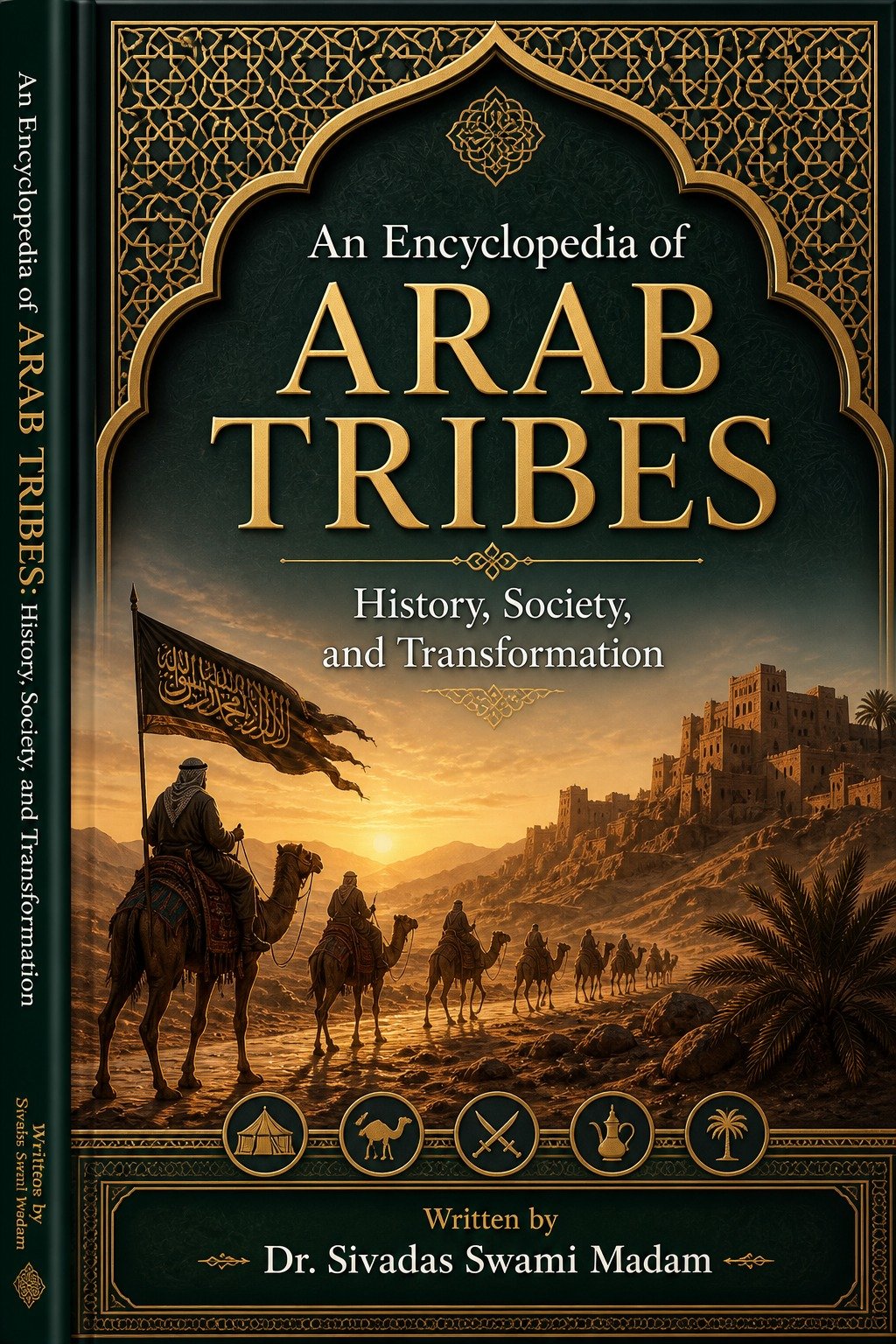
An Encyclopedia of Arab Tribes: History, Society, and Transformation
An Encyclopedia of Arab Tribes explores the enduring social systems that have shaped Arab civilisation across deserts, oases, mountains, and coastal regions. Moving from ancient kinship structures and genealogy to Bedouin life, trade, customary law, and modern urban society, the book presents tribal identity as a living and adaptable force. Its country-wise coverage and accessible, research-oriented approach make it a valuable reference for students, scholars, policymakers, and readers interested in Arab history, anthropology, culture, and the continuing relationship between tradition and modernity.
Description
Long before the emergence of kingdoms, caliphates, and modern nation-states, tribes provided the essential framework through which Arab communities organised society, preserved ancestry, maintained order, protected resources, and transmitted cultural memory. An Encyclopedia of Arab Tribes: History, Society, and Transformation offers a systematic examination of this influential institution from its early foundations to its place in the contemporary Arab world.
The book begins with the environmental and social conditions that encouraged the development of kinship-based communities across the Arabian Peninsula. It explains the importance of genealogy, or nasab, alongside oral history, collective responsibility, tribal leadership, honour, hospitality, and systems of alliance. Detailed discussions of Bedouin life, camel herding, caravan commerce, agriculture, maritime livelihoods, tribal law, mediation, and customary justice reveal the complexity of societies too often reduced to stereotypes.
A substantial country-wise section examines tribal formations across Saudi Arabia, Jordan, Iraq, Syria, Kuwait, the United Arab Emirates, Oman, Qatar, Bahrain, Yemen, and North Africa. By presenting tribes within their geographical, historical, and cultural settings, the volume enables readers to recognise both regional differences and shared civilisational patterns.
The later chapters consider how urbanisation, education, state formation, oil economies, industrialisation, migration, and digital communication have transformed tribal life. Rather than portraying tribes as remnants of an earlier age, the book demonstrates how tribal identities have adapted through social networks, cultural preservation, political participation, and changing community roles.
Written in a structured, explanatory, and research-oriented style, this reference work brings together history, anthropology, sociology, geography, genealogy, political studies, and cultural analysis. It is particularly suited to students, researchers, educators, diplomats, policymakers, and general readers seeking a clearer understanding of Arab society, cultural resilience, and the evolving relationship between heritage and modern life.
Shipping
Questions & Answers
Vendor Info
Vendor Information
- No ratings found yet!
More Products
-
-10%

The Eyes of Mahakumbh
Original price was: ₹399.00.₹359.00Current price is: ₹359.00. -
-